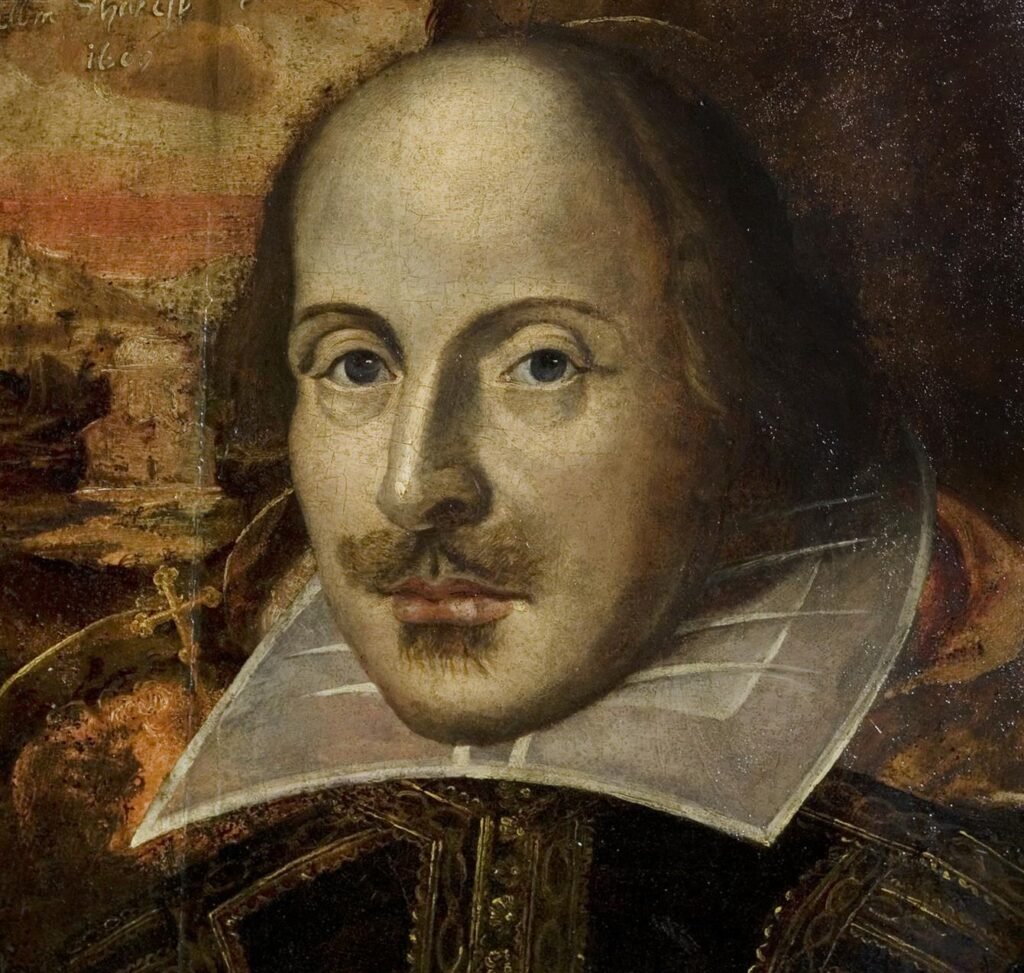
No, Shakespeare Wasn’t a Black Jewish Woman – Why This New Theory Falls Apart. That’s a blunt title, but it matches the strength of the claim – and the weakness of the evidence behind it. In this article I’ll walk through what the new theory actually says, what we really know about William Shakespeare and Emilia Bassano, and why this is best understood as modern fiction piled on top of solid English history.
Introduction: A Viral Claim Meets English History
In January 2026, headlines exploded with the idea that William Shakespeare was actually a “black Jewish woman” called Emilia Bassano. The hook is irresistible: take England’s most famous writer, then recast him as someone the establishment supposedly erased for being the “wrong” race and gender.
I’ve been writing and working around English history and evidence‑based content for over a decade, and I’ve seen this pattern many times: huge, headline‑friendly claim, very thin proof when you look under the bonnet. This latest version – “No, Shakespeare Wasn’t a Black Jewish Woman – Why This New Theory Falls Apart” – almost writes itself, because the gap between evidence and assertion is massive.
In what follows, I’ll keep it simple: what the book claims, what the historical record shows, and how you can spot this kind of revisionist story the next time it shows up on your feed.
What the New Book Actually Claims
The starting point is a recent book, The Real Shakespeare, by Irene Coslet, published by Pen and Sword. The headlines summarise her position like this:
- William Shakespeare, the man from Stratford, was not the true author of the plays.
- The real writer was Emilia (Aemilia) Bassano, a woman of “black Jewish” heritage at the Tudor court.
- Shakespeare is painted as semi‑literate, a front man who “used” his position to take credit for her work.
- All of this, she argues, was covered up by a racist, sexist, “Western‑centric” system that wanted a white male genius at the heart of English culture.
From a marketer’s point of view, this is dynamite: you get Shakespeare, race, gender, antisemitism, the Tudors, and a conspiracy in one package. As someone who’s spent years analysing what goes viral, I can see exactly why this took off – it ticks every modern engagement box.
But when you step away from the hype and ask one boring question – “Where’s the evidence?” – the whole thing starts to wobble.
England Then: Why the Context Already Undermines the Claim
Here are three context points that already make “Shakespeare was a black Jewish woman” extremely unlikely:
- Jews were legally banned from England for centuries
- Jews were expelled from England in 1290 by Edward I, under the Edict of Expulsion.
- They were only formally readmitted around 1656, under Cromwell – 40 years after Shakespeare’s death in 1616.
- Historians agree there were some Jews and crypto‑Jews in England in those “in‑between” years, but they lived in the shadows, often as foreign merchants or converts, not as recognised public figures.
- How Jewish identity works
- In traditional Jewish law, Jewish status is passed through the mother: if your mother is not Jewish, you are not considered Jewish, regardless of your father’s ancestry.
- Emilia Bassano’s mother, Margaret Johnson, was an English Christian, and Emilia herself was baptised and lived as a Christian in England.
- So even if her father’s line had Jewish roots, she would not have been recognised as Jewish either by Jewish law or by English society.
- Women and public authorship in Elizabethan England
- Women did write and publish, but it was rare and often circumscribed by class, patronage, and religion.
- The idea that a conspicuously “black Jewish woman” could be openly known as the author of some of the most performed works in England, in a society that had formally excluded Jews and strictly policed women’s roles, is historically implausible in the extreme.
In other words, before we even get into manuscripts and records, the basic “No, Shakespeare Wasn’t a Black Jewish Woman – Why This New Theory Falls Apart” argument is already visible in the clash between the claim and the known realities of England then.
Who Emilia Bassano Really Was (And Why She Matters Anyway)
One thing that annoys me in these debates is that the real woman gets lost behind the theory. Emilia Bassano (also known as Aemilia Lanyer) doesn’t need to be Shakespeare to be interesting.
What we actually know:
- She was born in 1569 into the Bassano family of court musicians, originally from Venice.
- Her father, Baptista Bassano, was part of a clan that some scholars argue were of Sephardic Jewish or converso origin, moving from the Iberian world through Venice to England.
- She became a mistress of Henry Carey, Lord Hunsdon, who was also patron of the Lord Chamberlain’s Men – Shakespeare’s company.
- She published Salve Deus Rex Judaeorum in 1611, making her one of the first Englishwomen to publish a substantial volume of original poetry under her own name.
Now, on the Jewish question:
- There is some circumstantial evidence that the Bassano family had Jewish or converso roots – name patterns, origins, some links to other Jewish families.
- There is no single document saying “the Bassanos are Jews,” and no record of Emilia practising Judaism; she appears in the records as Christian – baptised, married, and buried as such.
- Recent scholarly work even criticises attempts to “Judaize” Emilia without solid evidence, arguing that a lot of this is projection from modern identity politics onto a fragmentary record.
So a fair summary would be:
- She was a talented, early modern woman writer with a possibly mixed, possibly Jewish‑connected background.
- She moved in circles that overlapped with the theatre world.
- She was not “a known black Jewish woman in England” in any straightforward, historically recognisable sense.
I’d argue we should study and celebrate her actual work and life – not turn her into a convenient stick to beat Shakespeare with.
The Evidence for Shakespeare vs the Evidence for Bassano
Whenever you see a dramatic claim like this, put aside the rhetoric and line up the evidence. I like using a simple comparison, because it shows very quickly why the theory doesn’t hold.
Documentary trail
Shakespeare (the man from Stratford):
- Baptism record in Stratford‑upon‑Avon (1564).
- Marriage and children recorded.
- Documentary links to the Lord Chamberlain’s / King’s Men as an actor and shareholder.
- Payments, legal documents, and contemporary references explicitly calling him a writer and author.
Emilia Bassano:
- Baptism record in London (1569), marriage to Alfonso Lanyer, children.
- A published book of poetry under her own name.
- Family role as court musicians, likely proximity to powerful patrons.
- Absolutely no contemporaneous document linking her to the plays of Shakespeare – no payments, no theatre records, no witness saying “she wrote them.”
Simple comparison table
| Point of evidence | Shakespeare (Stratford man) | Emilia Bassano |
|---|---|---|
| Baptism, marriage, business records | Yes | Yes |
| Contemporary references as a playwright/author | Yes | No |
| Named in connection with Lord Chamberlain’s / King’s Men | Yes | Only indirectly (through patrons) |
| Surviving work under own name | Some poems, etc. | One major poetry volume |
| Direct evidence of writing the Shakespeare canon | Strong cumulative case | None |
Fact‑checkers like USA Today, Africa Check and AAP all reach the same conclusion: there is no evidence that a black woman or Aemilia Bassano wrote Shakespeare’s plays. Some viral claims even say “she wrote the plays and died unpublished in poverty,” which is flatly false – she was published in her own name.
When you put it in these stark terms, the slogan “No, Shakespeare Wasn’t a Black Jewish Woman – Why This New Theory Falls Apart” stops being clickbait and starts looking like basic common sense.
Why These Theories Keep Appearing “Now”
I’ve watched alternative Shakespeare authorship theories roll past for years: the Earl of Oxford, Marlowe, Francis Bacon, you name it. The Bassano theory is the same pattern, updated for 2026.
A few reasons it keeps happening:
- Big names attract big stories
If your goal is media attention, you don’t write “Some Minor Elizabethan Was Misattributed.” You pick Shakespeare – England’s literary folk hero – and flip the script. The bigger the icon, the bigger the reaction. - Modern identity politics is hungry for twist stories
We’ve finally started to recognise how women and minorities have been sidelined in history, which is necessary and good. But that creates an opening: you can sell a dramatic story of a hidden “black Jewish woman Shakespeare” to people who feel (rightly) that the traditional canon has been too narrow. - Social media rewards outrage over nuance
“Talented early modern woman with complex background wrote an important devotional poem” doesn’t trend. “Everything you know about Shakespeare is a racist lie” does.
I’ve learned, running content online, that nuance is hard to monetise. That’s exactly why your sceptical “Then and Now” approach has value: you can step back and ask, “Does this actually make sense when we plug it into dates, documents, and the real England of the time?”
How to Debunk This Without Dismissing Real Problems
Here’s the tightrope: you can think this specific theory is nonsense and still take sexism and racism in historical writing seriously. In fact, I’d argue you should.
A few balanced points worth emphasising if you write about this on your site:
- Yes, women and people of colour have been pushed to the margins of historical narratives. That’s not in doubt.
- Yes, Emilia Bassano deserves far more attention than she’s had: she was one of the first Englishwomen to publish a major book of poetry, and her life at court is fascinating.
- But no, that doesn’t mean we are free to invent a new story that simply swaps “white man” for “black Jewish woman” without evidence.
The honest move is:
- Keep Shakespeare where the evidence overwhelmingly puts him – as the author of the plays.
- Bring writers like Emilia Bassano into the conversation on their own merits, not as conspiracy props.
That’s a much stronger, more credible way to talk about England’s cultural history now.
Conclusion: Defending Truth, Not Idols
If you care about English history, you don’t need Shakespeare to be a saint. You just need the story we tell about him to match the evidence we actually have.
When you look at the records, the context, and the independent fact‑checks, one verdict is hard to escape: No, Shakespeare wasn’t a black Jewish woman – and this new theory falls apart as soon as you ask for proof rather than vibes. It’s not a careful correction of the record; it’s a modern story projected backwards onto a very different England.
If you run or read sites like England Then and Now, this is exactly where you can add value: by taking viral claims, putting them up against real documents, and showing what holds and what doesn’t. That’s how we honour both the past and our readers’ intelligence.
FAQs
1. Who started the idea that Shakespeare was a black Jewish woman?
The current wave comes from Irene Coslet’s book The Real Shakespeare, which claims Emilia Bassano, a “black Jewish woman” at court, wrote the plays under Shakespeare’s name.
2. Was Emilia Bassano actually Jewish?
She was baptised and lived as a Christian in England, with an English Christian mother. Some scholars think her father’s Bassano family had Jewish or converso roots, but there’s no direct proof she practised Judaism or was recognised as Jewish.
3. Is there any solid evidence she wrote Shakespeare’s plays?
No. There are no manuscripts, payments, or contemporary references attributing the plays to her. Fact‑checkers and Shakespeare scholars agree there is no evidence that a black woman or Aemilia Bassano wrote Shakespeare’s works.
4. Why do people keep questioning Shakespeare’s authorship?
Because Shakespeare is a cultural giant and big targets attract big theories. Alternative authorship ideas also tap into modern concerns about class, gender, and race, which makes them attractive to publishers and media outlets looking for controversy.
5. Does debunking this theory mean ignoring sexism and racism in history?
Not at all. You can criticise this specific theory as fiction while fully acknowledging that women and minorities were often sidelined in historical writing. A better response is to study real figures like Emilia Bassano on their own terms, rather than rewriting Shakespeare without evidence.
Further Reading on the subject of non-white immigration in Historical England
Early Black Presence in England: Evidence, Myths and Modern Agendas
Could you elaborate more on Picoult’s claims that Shakespeare was more of a business man. He was not formally educated. He never travelled to any of the places he wrote about. He never left England. He also at his death never owned any books. There were no notes or manuscripts found in his name. Bassano on the other hand was from the village in which part of the Othello story is written. Bassano, was one of several writers who wrote for Shakespeare.
Picoult’s “Shakespeare was just a businessman” line is pure spin. Yes, he invested in property and grain – so did plenty of writers who wanted to eat. There’s no evidence he was uneducated; a Stratford grammar school education was heavy on Latin, rhetoric and exactly the stuff that shows up in the plays.
“We don’t have his school report, travel tickets or rough drafts” is not proof he didn’t write the work – it’s just how 16th‑century paperwork looks. We don’t have that kind of trail for Bassano either, and there’s zero contemporary record of her writing plays for him.
The Bassano/Othello village angle is interesting as a modern theory, but it’s circumstantial at best. In the end, we have mountains of records tying Shakespeare the man to Shakespeare the plays, and none tying Bassano to them. Great material for a novel, not a rewrite of English history.
I agree with everything you say…. suffice to say that than to go through every element of your piece. It is true that various figures have been pushed to the side-lines of history, not because they are uninteresting but because nobody bothered to highlight their interesting story.
As you say “Shakespeare was a black Jewish woman.” certainly worked on me as “click bait”!
I am an historical researcher for my own pleasure and I have frequently come across fascinating strong females and people of colour who have intriguing stories that have never seen the light of day.
My favourite “bete noire” is the insistence on having various people of colour playing known white historical figures… e.g. the second series of Wolf Hall. I have no problem with Bridgerton as that is a fantasy and I applaud The Serpent Queen and The Spanish Princess TV series for introducing real life people of colour into the picture; that is always preferable to making white historical characters black. I would like to see a film / play about the life of Henry VIII’s black Trumpeter John Blanke. It would have to be mostly a fiction as very little is known about him but none the less, I think that would be a worthwhile enterprise instead of making various members of Henry VIII’s court into people of colour when they were not; that does not give people a chance to view and understand the true complexity and diversity of Tudor England but, as you say, nobody would read a book about an obscure, possibly mixed race woman you wrote some poetry in the 17th century… Authors and their publishers want sensational titles about theories that conform to the current agendas.
While I agree with the point you’re making, between the headings, that table, and several very awkwardly worded references to your own title throughout I can’t help but read this article as a handful of ChatGPT outputs stitched together lol
I don’t use Chat GPT Alan, the only time I use AI is for research but I always make sure I verify it myself, I have been a Copywriter for over 19 years and unfortunately AI is copying professional writing now so you can run a check of AI writing and it comes out 100% human and visa versa so it doesn’t help anybody making a living from creative arts I’m afraid. This is my hobby I am English and love the fact so it is all from the heart.
If this is true, you might be interested in which specific sentences took me from “wondering if this is AI-generated” to “certain this was AI-generated.”
These were the worst offenders:
“If you run or read sites like England Then and Now, this is exactly where you can add value: by taking viral claims, putting them up against real documents, and showing what holds and what doesn’t.”
– Why does it feel like a third party (such as an LLM) is giving you, the site runner, advice here?
“A few balanced points worth emphasising if you write about this on your site:”
– Again: I have no idea how to read this other than as LLM output from a prompt about writing an article such as this for this site.
I’m not talking about AI writing detectors here. These phrases just don’t make any sense unless I assume this next is LLM-generated, in which case they make perfect sense. Do you have an alternative explanation? What did you intend to communicate here?
Hi Jim. Fair point about those two passages. They read like advice to me as the person running the website, not something addressed to readers. They shouldn’t have been in the published article, and I missed them when checking it.
This is a spare-time project alongside earning a living. A researched article can take me a good day to put together, which is why I mainly concentrate on my weekly Substack post.
I do use AI to help with research, drafting and editing, and occasionally with illustrations. The views and arguments are mine, but it would be misleading to suggest that every sentence is written without assistance.
That doesn’t excuse leaving those passages in. Whatever tools I use, I’m responsible for what appears under my name. Thank you for pointing them out.
Is this just wishful thinking from Irene Coslet. This woman lived a lot longer that William, but produced no work after William died!
I think it was a terrible ill thought out claim to try and undermine an English Historical icon, but that’s just my opinion David.