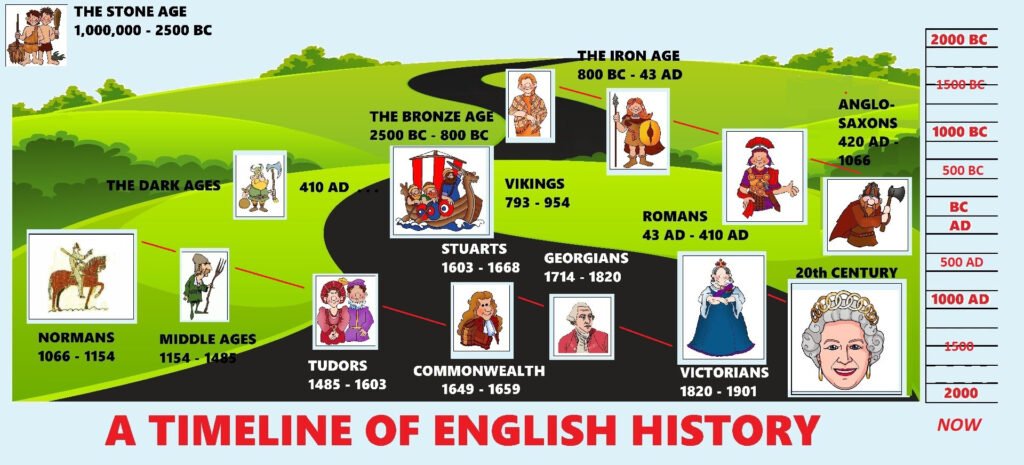
English history and identity are tangled together: you can’t talk about one without bumping into the other. From Anglo‑Saxon kingdoms and the Norman Conquest to empire, devolution and today’s culture wars, the idea of “what it means to be English” has never been fixed. This pillar page brings all those strands together and links out to detailed articles that explore how English identity has changed over time – and how it still shapes politics, class, culture and everyday life today.
What This English History & Identity Hub Is For
This page is the central gateway into everything on the site that deals with English history and identity, rather than just specific towns or photos.
Here you’ll find links to:
- Big historical turning points that helped create a distinct English identity – from early kingdoms and 1066 to the Reformation, the Civil War, empire and the World Wars.
- The long story of English national identity itself – how people shifted from thinking of themselves as subjects of a king to feeling English, British, or something else entirely.
- Modern debates around Englishness: class, region, Brexit, immigration, devolution and the tug‑of‑war between English and British identity in today’s politics.
Each article linked from this hub takes one of these threads and looks at it in more depth, always with the same core question in the background: what did being English mean then, and what does it mean now?
The Deep Roots of English History
You can’t talk about English identity without looking at the long run of history. England did not appear overnight; it was hammered out over centuries of invasion, conflict and negotiation.
Key themes you’ll see in the linked articles include:
- Early England: Anglo‑Saxon kingdoms gradually unifying into something recognisably “English”, with figures like Alfred the Great and texts like Bede’s Ecclesiastical History of the English People helping shape a shared story.
- Conquest and change: How the Norman Conquest layered French‑speaking elites onto an Anglo‑Saxon population, changing law, language and land ownership – but not wiping out older English identities.
- Faith, power and law: The Reformation, the English Civil War, Magna Carta, and the growth of Parliament all fed into a sense that England was different: more legalistic, more focused on rights, and increasingly proud of its institutions.
These background pieces give the “then” part of English history & identity – the raw material that later generations reused, romanticised or rejected when trying to define what England is.
English Identity: From Kingdom to Nation to Something More Complicated
English identity didn’t stay static once a kingdom was formed; it kept evolving. Scholars argue that something like a national English identity can be traced back to the Anglo‑Saxon and medieval periods, but it really takes on a more familiar form as England becomes a central part of a wider British state.
Articles linked from this hub explore:
- Medieval and early modern Englishness: How wars with France, religious change and domestic conflicts sharpened a sense of “us” and “them”, and how English people began to see themselves as a distinct people, not just subjects of a dynasty.
- Englishness within Britain: After the Acts of Union, many people were encouraged to think of themselves as British first, English second, as a way of smoothing over tensions between England, Scotland and Wales.
- Myths and stories: Legends like King Arthur and Robin Hood – and later, romanticised images of the English countryside – helped fix certain ideas about Englishness that often ignored or sidelined non‑English identities within the UK.
These pieces help explain why talk of “English history” and “British history” often gets muddled, and why some people feel strongly English but not particularly British, or the other way round.
Class, Region and the Many Faces of Englishness
One of the most important points about English identity is that it is not a single, neat thing. It looks different depending on class, region and background.
Research and commentary show that:
- North and South often imagine each other as different kinds of Englishness – with London and the South East seen as rich and powerful, and other regions feeling overlooked or exploited.
- Class continues to shape identity: working‑class, middle‑class and upper‑class versions of being English bring different values, accents, tastes and politics, and those differences still matter.
- Immigration and diversity have reshaped English towns and cities, especially since the mid‑20th century, producing new forms of Englishness that mix older traditions with influences from the Caribbean, South Asia, Africa, Europe and beyond.
Articles linked from this hub look at English identity through these lenses, connecting them to real‑world fault lines: resentment towards London, arguments over “levelling up”, class snobbery, and rows about who counts as “properly English”.
English Identity and Modern Politics
In recent years identity has stopped being background noise and become one of the main dividing lines in English and British politics. Survey work shows that cultural and identity issues now sit alongside traditional left–right economic questions when it comes to how people vote and what they care about.
From this hub, you’ll find pieces on:
- Brexit and Englishness: How debates around the EU exposed differences between more liberal, global, urban identities and more traditional, local or nationalist versions of Englishness.
- Devolution and English grievance: The feeling among some English voters that Scotland, Wales and Northern Ireland have stronger institutional voices, while England has been told to be “British” and quiet.
- Culture wars: Arguments about flags, statues, history teaching, immigration, and what should be celebrated or criticised about England’s past and present.
These articles don’t pretend there is one “correct” English identity. Instead, they look at the competing versions that are currently jostling for space – and how those clashes show up in elections, media rows and everyday conversations.
England Then and Now: How Identity Meets Daily Life
This English History & Identity pillar links closely with the other strands of the site. The ideas discussed here aren’t just theoretical; they show up in the way towns are rebuilt, who feels at home in certain places, and which stories are told about the past.
Across the linked content you’ll see:
- How historical narratives – empire, industrial success, wartime courage – still influence how people think about England’s place in the world.
- How identity shapes views on issues like crime, welfare, immigration, climate policy and the monarchy.
- How different generations experience Englishness differently: older people raised on one set of assumptions, younger people growing up in a much more diverse, globalised environment.
By tying these threads together, the English History & Identity hub gives context to the more local or visual “then and now” pieces elsewhere on the site.
How to Use This English History & Identity Page
Think of this page as the contents list for everything on the site that tackles English history & identity directly.
You can:
- Start with the big historical overviews if you want a refresher on the main periods that shaped England.
- Jump straight into identity‑focused articles if you’re more interested in the arguments about what “being English” means right now.
- Use internal links between pieces to follow a theme – for example, from medieval identity to Victorian nationalism, then through to modern debates over Englishness and Britishness.
As new articles are published, they’ll be added here in sensible sections (e.g. “Historical Foundations”, “National Identity”, “Class & Region”, “Modern Politics”), so you always have a clear route into the latest content.
If You’d Like Your Story of Englishness Included
This hub isn’t just about textbooks and think‑tanks; English identity is lived, not just studied. If you have a strong view or personal story about Englishness – how it feels in your town, your workplace, your family – it can help shape future pieces.
If you would like your angle on English history & identity to appear here:
- Get in touch via the contact page.
- Tell us where in England you’re from, how you’d describe your sense of identity (English, British, both, something else), and how that has changed over time.
- If you have family stories, local experiences or examples that clash with the official narratives, mention them – they are often the most revealing.
Suggestions and real‑life perspectives help decide which topics to tackle next, from class and region to immigration, flags, faith and everything in between.
Start Exploring English History & Identity
English history and identity are messy, contested and constantly evolving – which is exactly why they are worth exploring. From early kingdoms and Norman lords to council estates, commuter towns and online culture wars, every era adds another layer to what “English” can mean.
Use the links on this page to dive into the periods, ideas and debates that interest you most. Follow the connections between past and present, and if you think something important is missing, say so. Over time, this English History & Identity hub will grow into a richer map of how England has seen itself – then and now.