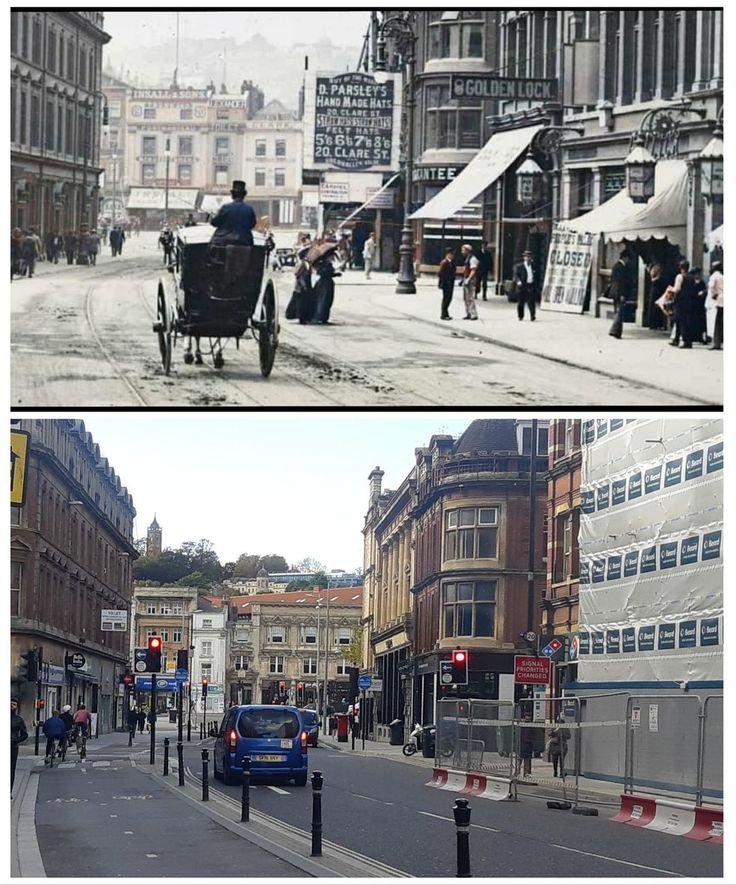
Everyday England Then and Now is all about the stuff most history books rush past: work, home, family, food, pubs, shopping, travel and the quiet routines that actually make up people’s lives. From cramped Victorian slums and coal‑smudged factory shifts to semi‑detached suburbs, online shopping and Deliveroo, this pillar page brings together all the articles that compare daily life in England “back then” with the way people live now.
Here you can jump into stories about how people earned a living, fed themselves, raised families and spent their spare time across different eras – and see what has improved, what has stayed stubbornly familiar, and what has been lost along the way.
What This Everyday England Hub Covers
This page is the central index for everything on the site that looks at English daily life rather than just big battles, laws or famous names.
From here you’ll find links to articles on:
- Work then and now: from service, mines and mills to offices, retail, call centres, gig work and working from home.
- Home and housing: cottages, back‑to‑backs, tenements, council estates, semis, tower blocks and new‑build estates.
- Family and social life: how people brought up children, cared for relatives, and balanced work with home life across different periods.
- Food, pubs and leisure: diets from bread and dripping to supermarket aisles, plus pubs, clubs, music halls, cinemas and modern streaming evenings at home.
- Everyday rules and manners: queuing, politeness, school discipline, class etiquette and the unwritten rules of English life.
Every linked article takes a straightforward “then vs now” approach and aims to show how big historical shifts – industrialisation, war, welfare reforms, women’s rights, technology, globalisation – actually felt in ordinary English streets, homes and workplaces.
Work in England: From Service and Slums to Offices and the Gig Economy
One of the biggest changes in everyday England is work. In earlier centuries, many people’s lives were shaped by service, agriculture or heavy industry; today, most work in services, tech, healthcare, education, logistics and countless office‑based roles.
Articles linked from this hub explore:
- Victorian and Edwardian work: long days in factories, mines and domestic service, with servants forming one of the largest employment groups in Britain around 1900.
- Early 20th‑century shifts: the move from rural labour to urban jobs, the first labour laws, and how industrial and transport changes altered daily routines.
- Modern work: office life, zero‑hours contracts, commuting, remote work and side hustles, plus the decline of traditional manual jobs in many towns.
By comparing working days then and now, these pieces look at what has actually improved (safety, hours, pay, opportunity) and what feels worse (job security, stress, housing costs, commuting, digital overload).
Home Life: Houses, Comfort and Crowding Then and Now
Homes are one of the clearest “then and now” contrasts. Many English people today take indoor bathrooms, central heating, electricity and separate bedrooms for granted, but those are very recent gains when you zoom out over a couple of centuries.
In the linked Everyday England posts you’ll see:
- Historic housing: timber‑framed cottages, cramped tenements, back‑to‑back terraces and lodging houses, where large families often lived and slept in single rooms.
- Industrial city living: slums with poor sanitation, damp cellars and overcrowded lodging houses, especially in fast‑growing 19th‑century cities.
- 20th‑century improvements: council housing, suburbs, building regulations and welfare policies that slowly raised standards for millions.
- Modern homes: a mix of owner‑occupied houses, private rentals, social housing and tiny flats, with space and stability often under pressure in expensive areas.
These stories highlight the trade‑offs: far better comfort and health now, but also higher housing costs, overcrowding in some areas, and worries about quality, security and community.
Family, Childhood and Education: The Shape of Everyday Life
Family life and childhood have shifted dramatically. What counts as “normal” for family size, parenting, schooling and discipline looks very different now compared to Victorian times or the early 20th century.
Articles gathered under Everyday England Then and Now cover:
- Household structures: large extended families vs smaller nuclear households and more people living alone or in shared arrangements today.
- Childhood then: children working from a young age, harsh discipline at home and school, and limited access to education for many.
- Childhood now: far more schooling, better health, different kinds of pressure (testing, screens, social media) and new concerns about safety and freedom.
- Gender roles: how expectations around mothers, fathers and breadwinners have changed over time, affecting everything from housework to career choices.
By setting “then” alongside “now”, these pieces show how much more choice and protection many people have – and how some old problems (poverty, stress, balancing work and family) keep returning in new forms.
Food, Pubs and Leisure: From Bread and Dripping to Takeaways and Netflix
You can’t talk about everyday England without talking about food and free time. Diets, pubs, games and entertainment are some of the clearest markers of how daily life has changed.
In the food and leisure themed articles linked here you’ll find:
- Historic diets: simple, repetitive meals for most people, with bread, stews and basic local produce dominating and meat as an occasional treat.
- Pubs and social clubs: their role as community hubs, especially for working‑class men, and how that function has shifted with changing drinking habits and smoking bans.
- New leisure: the rise of football, music halls, cinemas, holidays, radio and TV as mass entertainment.
- Modern options: takeaways, supermarkets, multicultural food, gyms, streaming, gaming and endless online content – plus concerns about health, obesity and loneliness.
These then‑and‑now comparisons ask whether more choice has made daily life richer, or whether some sense of shared community and routine has been lost along the way.
Everyday Rules, Manners and “The Way Things Are Done”
Another part of Everyday England Then and Now is the unwritten rulebook: manners, etiquette, school rules and the small social habits that make English life feel like English life.
The hub links to pieces that look at:
- Discipline and respectability: strict school punishments, rigid ideas of respect, and norms that varied sharply by class and gender.
- Social etiquette: politeness, queuing, small talk and a strong sense of public vs private behaviour that developed over time.
- Changing norms: more informality and diversity in language, dress and attitudes, alongside ongoing arguments about “good manners”, “snowflakes” and “declining standards”.
Comparing then and now here is less about right or wrong and more about seeing how social rules adjust as work, housing, education and media change.
Everyday England Then and Now Across the Story of England
This pillar page sits in the middle of the wider site: it connects the big historical narrative to the details of daily life. English Heritage and other historians often stress that to really grasp the “story of England”, you have to look at how ordinary people lived, not just at kings, wars and parliaments.
Across the linked articles you’ll see:
- How industrialisation, urbanisation, empire, war and welfare reforms filtered into working hours, diets, housing and holidays.
- How technology – from electric light and railways to the internet and smartphones – reshaped daily rhythms.
- How class, gender, region and immigration have given different groups in England very different everyday experiences.
This Everyday England Then and Now hub brings those threads together so you can see patterns across time rather than treating each era as a separate box.
How to Use This Everyday England Then and Now Page
Use this hub as your starting point when you’re interested in what life actually felt like in England at different times.
You can:
- Pick a theme – work, home, family, food, leisure – and follow the links through several eras to see how it changes.
- Jump from an Everyday England piece to related content in the Towns & Cities or English History & Identity sections using internal links.
- Use the articles as context when you read about specific towns: understanding factory work or slum housing makes local “then and now” photos much more meaningful.
As more posts are published, they’ll be slotted into clear sections under this page (for example: “Work”, “Home & Housing”, “Family & Childhood”, “Food & Leisure”, “Manners & Culture”), and interlinked so you can navigate by topic.
If You’d Like Your Everyday England Story Included
Everyday England isn’t just an academic subject; it’s something people live and remember. Personal experiences and family stories often reveal as much about then and now as official histories do.
If you would like your angle on Everyday England Then and Now to appear here:
- Get in touch via the contact page.
- Share where and when you grew up, what work, home and school were like, and how those have changed in your area.
- Mention any old photos, diaries, recipes, workplace memories or local traditions you think capture everyday life in a particular decade.
These suggestions can help shape future articles – for example, comparing working men’s clubs to modern gyms, or 1950s corner shops to today’s supermarkets and delivery apps.
Start Exploring Everyday England Then and Now
Everyday England Then and Now is here to show that history is not just dates and big events; it is the story of getting up, going to work, coming home, eating, talking, resting and trying to enjoy life in whatever circumstances you’re given. From washboards and gas lamps to washing machines and smart meters, from slum courts to cul‑de‑sacs, the details matter.
Use the links on this page to explore the parts of daily life you care about most, compare them across time, and, if you think something important is missing, send a suggestion. Over time, this Everyday England Then and Now hub will grow into a fuller picture of how ordinary English lives have changed – and what still feels familiar, even a century or more later.