Under English Constitutional Law, Parliament Can’t Give Away What It Doesn’t Own. Here’s Why 47 Years of EU Membership Violated The People’s Sovereignty.
The Lie That Gave Away Your Country
I’ve followed politics closely for forty years, and in that time I’ve heard one lie repeated more often than any other:
“Parliament is sovereign. Parliament can do anything.”
This is the justification Westminster uses every time it wants to override your rights, sign away your sovereignty, or ignore what you actually voted for.
It’s how they justified joining the EU in 1973 without asking you first.
It’s how they stayed in for 47 years while EU law overruled English law.
It’s how they still justify obeying the European Court of Human Rights, even when it blocks English deportations.
But here’s what they don’t tell you:
Under English constitutional law, Parliament is NOT sovereign. YOU are.
The people of England are sovereign. Parliament governs on your behalf, not above you. And that means Parliament cannot give away sovereignty it doesn’t own.
In this post, I’m going to show you:
- Why English constitutional law places sovereignty with the people, not Parliament
- How the Bill of Rights 1689 (still in force) proves this
- Why that means EU membership was illegal and unconstitutional from day one
- Why the same applies to the ECHR and every other foreign body claiming authority over England
- And why only English self-governance can prevent Westminster from doing this again
This isn’t opinion. This is constitutional law. And once you see it, you can’t unsee it.
The Myth Westminster Wants You To Believe
Let me start with the lie.
Westminster claims that “Parliamentary sovereignty” is the bedrock of the British constitution. The idea is simple:
- Parliament is the supreme legal authority
- Parliament can make or unmake any law
- No Parliament can bind a future Parliament
- Therefore, Parliament can do anything – including joining the EU, obeying foreign courts, or signing treaties that override English law
This doctrine is taught in law schools. It’s cited by judges. It’s repeated by politicians whenever they want to justify something you never voted for.
But it’s a fiction.
It’s a convenient myth that gives the political class unlimited power. Because if Parliament can do “anything,” then Parliament can ignore the people, override constitutional protections, and hand sovereignty to foreign bodies – all without your permission.
And that’s exactly what they did.
But English constitutional law – the real constitutional law, built over centuries – says something very different:
The people are sovereign. Parliament serves the people. And Parliament cannot give away what belongs to the people.
Let me prove it.
What English Constitutional Law Actually Says: The People Are Sovereign
English constitutional law doesn’t come from one document. It’s built from centuries of struggle, precedent, and fundamental principles. And at the heart of it is this:
Sovereignty belongs to the people, not to government.
1. Magna Carta 1215: The King Is Subject To Law
Magna Carta established a revolutionary principle: even the King is not above the law.
It declared that the monarch could not act arbitrarily, could not imprison people without trial, and could not levy taxes without consent.
Why does this matter?
Because it established that authority in England is constrained by law – and that law protects the rights of the people. The King doesn’t grant rights; the people have rights that even the King must respect.
This is the foundation: power is limited, and the people’s rights come first.
2. The English Civil War 1642–1651: Authority Comes From The People
The English Civil War was fought over a simple question:
Who is sovereign – the King or the people?
King Charles I claimed divine right. He believed his authority came from God, not from the people, and that he could rule as he pleased.
Parliament – representing the people – said no. They argued that authority comes from the consent of the governed, not from God or bloodline.
Parliament won. The King was executed. And the principle was established:
In England, sovereignty resides with the people, expressed through their representatives.
3. The Glorious Revolution 1688–1689: Parliament Acts On Behalf Of The People
In 1688, Parliament deposed King James II and invited William and Mary to take the throne.
This was monumental. It proved that Parliament, representing the people, has the authority to decide who governs.
Parliament didn’t ask the King’s permission. Parliament didn’t wait for divine intervention. Parliament, acting on behalf of the English people, made the decision.
And when William and Mary accepted the throne, they did so on conditions set by Parliament in the Bill of Rights 1689.
This established beyond doubt:
Monarchs rule with the consent of the people, expressed through Parliament. Parliament acts on behalf of the people, not above them.
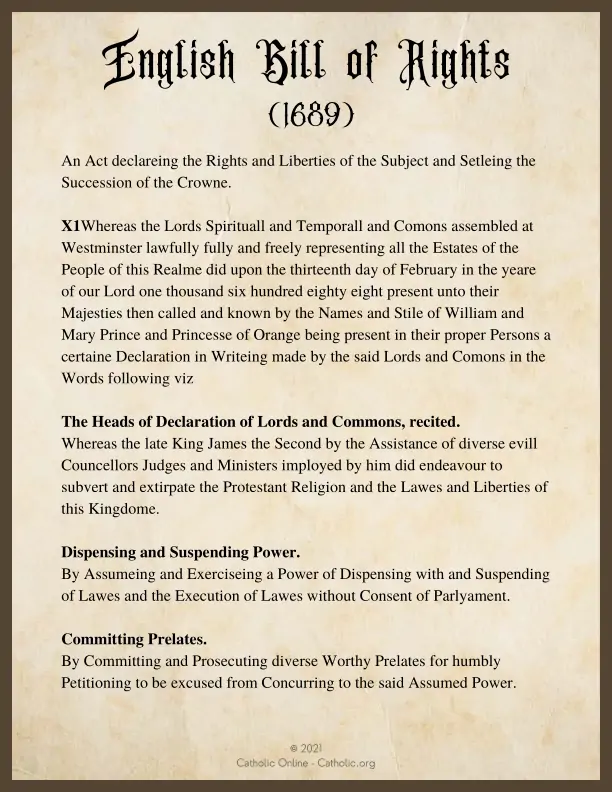
4. The Bill of Rights 1689: “In The Name Of All The People”
The Bill of Rights 1689 is still in force today. It’s one of the foundational documents of English constitutional law.
And it’s crystal clear about where sovereignty lies.
The Bill states:
“The said Lords Spiritual and Temporal and Commons… do in the name of all the people aforesaid most humbly and faithfully submit themselves, their heirs and posterities for ever”
Read that again: “in the name of all the people.”
Parliament acts in the name of the people. Not in its own name. Not with its own authority. On behalf of the people.
The Bill of Rights also describes the rights it protects as:
“The true, ancient and indubitable rights and liberties of the people of this kingdom”
Not rights granted BY Parliament. Rights that belong TO the people – rights that existed before Parliament, and that Parliament must protect.
This is the constitutional foundation: the people are sovereign, and Parliament is their servant.
5. Common Law: Rights That Belong To The People
English common law is built on the principle that rights and liberties belong to the people as their inheritance.
These rights were not created by government. They evolved through custom, tradition, and legal precedent over centuries.
Parliament’s job is to protect those rights, not to grant them – and certainly not to give them away to foreign powers.
Why This Destroys Parliament’s Justification For Joining The EU
Now we get to the heart of it.
Westminster’s justification for joining the EU in 1973 was simple:
“Parliament is sovereign. Parliament can pass any law. Therefore, Parliament could pass the European Communities Act 1972 and give power to the EU.”
But if the people are sovereign, not Parliament, this argument collapses.
Here’s why:
1. Parliament Cannot Give Away What It Doesn’t Own
If sovereignty belongs to the people, then Parliament holds that sovereignty in trust.
Parliament is a trustee. The people are the owners.
And here’s the legal principle:
A trustee cannot give away the property of the trust. A trustee cannot sell what it doesn’t own.
When Parliament joined the EU and made EU law supreme over English law, it gave away the people’s sovereignty – sovereignty that didn’t belong to Parliament in the first place.
That’s not legal authority. That’s breach of trust.
2. The Bill of Rights Forbids Foreign Authority Over England
The Bill of Rights 1689 – the people’s constitutional law – contains an oath that every monarch must swear:
“I do declare that no foreign prince, person, prelate, state or potentate hath or ought to have any jurisdiction, power, superiority, pre-eminence or authority, ecclesiastical or spiritual, within this realm.“
This is unambiguous:
No foreign power – whether religious or secular – can have jurisdiction or authority over England.
The EU:
- Made its laws supreme over English law
- Gave the European Court of Justice the power to overrule English courts
- Allowed foreign judges and foreign legislators to impose laws on England
- Exercised exactly the foreign jurisdiction and authority the Bill of Rights forbids
Parliament cannot override the people’s constitutional law.
The Bill of Rights was enacted “in the name of all the people.” It protects the people’s sovereignty from being given to foreign powers.
Parliament had no authority to violate it.
3. The People Never Authorized EU Membership Beforehand
Even if you accept the lie that Parliament could give away sovereignty, there’s another problem:
The people never gave Parliament permission.
- 1973: Parliament joined the EU via the European Communities Act
- 1975: A referendum was held – but after the fact, and only on whether to stay in, not whether to join in the first place
The original transfer of sovereignty happened without the sovereign people’s consent.
If the people are sovereign, then giving away the people’s sovereignty without asking the people first is illegal.
You can’t sell someone’s house while they’re out and then ask if it’s okay afterward.
EU Membership Was Unconstitutional And Unauthorized
Let me put this as clearly as I can:
EU membership was illegal from day one.
Not “bad policy.” Not “a mistake.” Illegal.
Here’s the legal case:
Premise 1: Under English Constitutional Law, The People Are Sovereign
Established by:
- Magna Carta (1215)
- The English Civil War (1642–1651)
- The Glorious Revolution (1688–1689)
- The Bill of Rights 1689 (still in force)
Parliament acts “in the name of all the people.” Parliament is trustee, not owner.
Premise 2: The Bill of Rights 1689 Forbids Foreign Authority Over England
The oath explicitly states:
“No foreign prince, person, prelate, state or potentate hath or ought to have any jurisdiction, power, superiority, pre-eminence or authority… within this realm.”
This is the people’s constitutional protection, not Parliament’s to override.
Premise 3: Parliament Cannot Give Away Sovereignty It Doesn’t Own
Sovereignty belongs to the people. Parliament holds it in trust.
A trustee cannot give away the property of the trust.
Premise 4: The People Never Authorized It
- No referendum before joining in 1973
- The 1975 referendum was after the fact and only on staying in
- The sovereign people never gave prior consent
Conclusion: EU Membership Was Unconstitutional And Void
- Unconstitutional – it violated the Bill of Rights by giving foreign powers authority over England
- Unauthorized – Parliament gave away the people’s sovereignty without the people’s consent
- Therefore illegal – Parliament had no legal authority to join the EU
Every EU law imposed on England for 47 years was imposed by an entity with no constitutional authority.
Brexit Proved The People Are Sovereign
If you need proof that the people are sovereign, not Parliament, look at what happened with Brexit.
2016: The People Voted To Leave
In the EU referendum, the people voted to leave the EU.
Parliament – the majority of MPs – wanted to remain.
So did the Lords. So did the establishment. So did the entire political class.
What Happened?
Parliament was forced to obey the people.
Despite years of delay, legal challenges, and attempts to overturn the result, the people’s will prevailed.
Why?
Because when it came down to it, Parliament had to admit:
The people are sovereign. Parliament cannot ignore the people.
Brexit wasn’t just about leaving the EU. It was about reasserting the constitutional principle that the people, not Parliament, are the ultimate authority.
And it worked.
The Same Logic Applies To The ECHR, The UN, And Every Foreign Body
If EU membership was unconstitutional because it violated the people’s sovereignty and the Bill of Rights, then the same applies to every other foreign body claiming authority over England.
The European Court of Human Rights (ECHR)
- A foreign court with foreign judges (from Turkey, Albania, etc.)
- Overrules English law and English courts
- Blocks English deportations
- Exercises “jurisdiction” and “authority” over England
This violates the Bill of Rights 1689.
The people never voted to give a foreign court power over England. Parliament had no authority to do it.
The United Nations
- Claims authority to set “international obligations” on migration, climate, human rights
- Pressures England to accept policies English people never voted for
- Treated by Westminster as binding, even when it conflicts with English interests
No foreign body has authority over England unless the English people consent.
International Treaties And Agreements
Every time Westminster signs a treaty that limits England’s sovereignty or gives foreign bodies power over English policy, it violates the constitutional principle:
No foreign power shall have jurisdiction or authority over England – and Parliament cannot give away the people’s sovereignty without the people’s explicit consent.
Why Only English Self-Governance Can Prevent This Happening Again
Here’s the uncomfortable truth:
Westminster violated the people’s sovereignty for 47 years. They’ll do it again unless we stop them.
The problem isn’t just the EU. The problem is a Westminster system that believes it can do anything.
The solution is English self-governance.
Why An English Parliament Changes Everything
An English Parliament, directly accountable to the English people, would:
- Be bound by English constitutional law – including the Bill of Rights and the principle that the people are sovereign
- Answer only to the English people – not to Scottish, Welsh, or Northern Irish MPs voting on English matters
- Cannot sign away English sovereignty – because it would be explicitly constrained by the principle that sovereignty belongs to the English people
- Require referendums for major sovereignty decisions – making it impossible to repeat what happened in 1973
Scotland has Holyrood. Wales has the Senedd. Northern Ireland has Stormont.
England has… Westminster. A system that gave away your sovereignty to Brussels for 47 years without asking you.
That’s why English self-governance isn’t radical. It’s restoring the constitutional order:
The English people sovereign over England.
The Three Questions: Who Benefits From The Lie?
Let me apply my usual framework:
1. Who makes money from the “Parliamentary sovereignty” lie?
- The political class (unlimited power, no accountability)
- Lobbyists and special interests (easier to control Parliament than convince millions of voters)
- International bodies and global elites (Westminster signs treaties ordinary people would never accept)
The English people? We lose every time.
2. When it’s the people’s sovereignty vs Parliament’s power, who does Westminster choose?
- Westminster chose EU membership over the people’s constitutional rights for 47 years
- Westminster still obeys the ECHR even when English people want foreign criminals deported
- Westminster signs international treaties without asking you
Every single time, Westminster chooses its own power over your sovereignty.
3. Which networks benefit from pretending Parliament is supreme?
- The globalist establishment that wants to erase national sovereignty
- International bodies (UN, EU, ECHR) that gain power when national parliaments can override the people
- Think tanks and NGOs funded by foreign money that push “international cooperation” (meaning: obey foreign bodies)
Once you see who benefits from the lie, you understand why they keep telling it.
Conclusion: Take Back What Was Always Yours
I’ve given you the constitutional case, built from 800 years of English law:
The people of England are sovereign. Parliament serves the people. Parliament cannot give away the people’s sovereignty.
That means:
- EU membership was unconstitutional and illegal from day one – Parliament violated the Bill of Rights and gave away sovereignty it didn’t own
- The people never authorized it – no referendum before 1973
- Brexit restored the constitutional order – the people reasserted their sovereignty
- The ECHR, UN, and all foreign bodies claiming authority over England violate the same principle
- Only English self-governance prevents this from happening again
This isn’t a political opinion. This is English constitutional law.
For 47 years, Westminster gave away your sovereignty to foreign powers.
They had no legal right to do it.
Under English constitutional law, you are sovereign, not them.
It’s time to take back what was always yours.
Demand English self-governance. Demand an English Parliament. Demand that those who govern England answer to the English people, and no one else.
Because the Bill of Rights 1689 says it clearly:
*”No foreign prince, person, prelate, state or potentate hath or ought to have any jurisdiction, power, superiority, pre-eminence or authority… within this realm.”
Further Reading:
- “What Does British Mean” Anymore? Why It’s Time for an English Exit and Reset
- Tower Hamlets 1960
- Britain First, England Nowhere: Why Not One “Tough” Party Will Say the E‑Word
- UK Unemployment by Ethnicity: What the Official Stats Really Show
- Anti‑English Lawyers: How Taxpayer‑Funded Human Rights Firms Profit from Foreigners Suing England