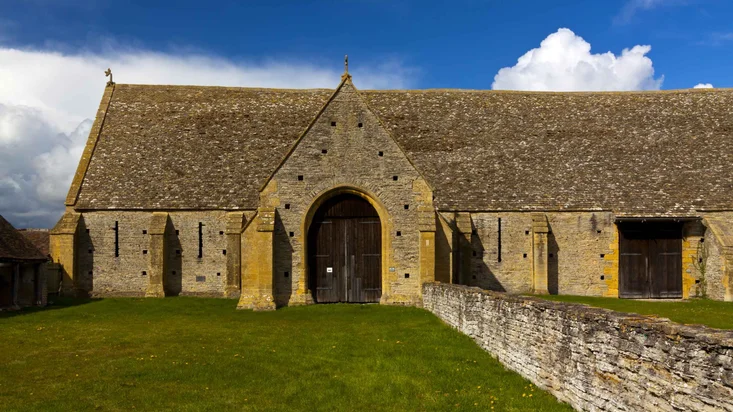
Ask most people what a tithe barn is and you’ll get a blank stare. Maybe a vague memory of a wedding venue they visited once. That’s the problem.
The origins of the tithe are not some dusty footnote in a history book. They’re the story of how ordinary English farmers were forced, by law, to hand over a tenth of everything they grew, every single year, for the best part of a thousand years. Not to their neighbours. Not to their community. To an institution that answered to Rome, and later to a state church that answered to Westminster.
I’ve spent over forty years reading about this country’s history. Not the sanitised version you get in a school textbook. The real version – the one where power moved from the church, to the crown, to private landlords, and ordinary people paid for every single transfer.
This article tells you what the tithe actually was, why it existed, who profited from it, and what it still tells us about how England is run today. No hysteria. Just the facts, and what they mean.
What The Tithe Actually Was
The word tithe comes from the Old English “teogotha” – meaning a tenth [web:18]. Simple enough. You grew wheat, you kept nine sacks, one went to the church.
The idea wasn’t English in origin. It comes straight from the Old Testament, from Deuteronomy: “bring all the tithes of that year’s produce and store it in your towns”. The early English church took that instruction and turned it into law.
The earliest solid legal evidence of a compulsory tithe in England appears in the law-text known as I Æthelstan, dating from the 10th century. From that point on, this wasn’t a suggestion. It was a legal obligation, backed by the same authority that could fine you, imprison you, or worse.
Every farmer, whether he liked it or not, gave up ten per cent of his grain, his hay, his livestock, his produce – handed over to the parish church or whichever monastery held the rights to that parish. That produce didn’t just disappear into a poor box. It got stored in purpose-built barns, some of which still stand today: Middle Littleton in Worcestershire, built for the monks of Evesham Abbey. Bradford-on-Avon in Wiltshire, built to serve Shaftesbury Abbey – reputedly the richest nunnery in the whole of medieval England.
Think about that for a second. A tenth of a working man’s harvest, funnelled straight into some of the wealthiest institutions in the country. Every year. For centuries.
Why It Happened
You don’t get a system like that by accident. It happened because the church, in medieval England, wasn’t just a spiritual institution. It was a landowner, a tax collector, and a political power all rolled into one.
The theological justification was simple: God provided the harvest, so a share of it belonged back to God’s representatives on earth. Nobody was going to argue with that when the local priest could threaten you with excommunication, and the parish court could fine you for withholding your due [web:26].
But strip away the religious language and what you’ve got is a tax. A flat ten per cent income tax, enforced by threat of spiritual and legal punishment, with no vote, no say, and no way out. Every peasant in England paid it whether the harvest was good or bad. There was no sliding scale for a bad year. If your crops failed, you still owed your tenth.
This is the pattern you see again and again in English history. A ruling institution decides what “should” happen to the fruits of your labour, and you have no say in the matter. The tithe wasn’t an outlier. It was the template.
Who Actually Benefited
Follow the money and you find out who the tithe was really for. It wasn’t the parish poor, whatever the official line claimed. It was the institution that held the rights to that parish – and increasingly, that meant monasteries and absentee landlords rather than the local priest doing the actual work.
By the later medieval period, a huge chunk of English tithe income had been “appropriated” by monasteries, who took the lion’s share and left the working parish priest a fraction to survive on. The people funding the system weren’t the people benefiting from it.
Then came Henry VIII’s Dissolution of the Monasteries in the 1530s. You’d think that would have ended the tithe. It didn’t. It just changed hands. The rights to collect tithes – along with the barns built to store them – passed from the church straight into the pockets of private landowners and the crown’s own favourites.
So the tax didn’t disappear when the religious justification for it collapsed. It simply got repackaged as a property right, and ordinary farmers kept paying it – now to secular landlords instead of abbots. The names changed. The people paying at the bottom stayed exactly the same.
That’s worth sitting with. A tax justified by God’s will carried on for another three hundred years after the religious institution that created it had been destroyed, simply because the people at the top found it too profitable to give up.
Who Is To Blame
Let’s be straight about this. The tithe survived as long as it did because every layer of authority in England had a reason to keep it going.
The medieval church created it and enforced it with the threat of eternal damnation – a powerful incentive when most people genuinely believed in it. The crown allowed it to continue because a wealthy church was a useful ally, right up until Henry VIII decided a wealthy church was a threat instead. And when the monasteries fell, the new secular landowners who inherited tithe rights had zero interest in giving up a guaranteed tenth of their tenants’ income.
Nobody in a position of power was ever going to volunteer to give this up. It took until the 19th century for tithes to be seriously questioned, and even then it wasn’t abolished out of principle – it was gradually commuted into cash payments and eventually phased out through legislation, dragging on into the 20th century.
The lesson here isn’t really about the tithe itself. It’s about how long an unjust system can survive in England when the people extracting the money have every institutional lever – church, crown, and landed gentry – working in their favour, and the people paying have none.
What A Serious Country Would Do
A country that actually respected its own history would treat what’s left of this system as a serious heritage asset, not a curiosity for wedding photographers.
There are still roughly two hundred medieval barns surviving in Britain, many of them tithe barns in name or in fact. Some are Grade I listed. Some, like Titchfield in Hampshire, have been converted into theatres and event spaces. That’s not necessarily a bad thing – a building that’s used gets maintained – but it does mean the actual history behind these buildings gets flattened into a nice backdrop for someone’s big day out, with no real explanation of what that building represents.
A serious country would fund proper interpretation at these sites. Not a laminated sign with three sentences on it. A genuine explanation of what the tithe was, who it hit hardest, and how it shaped the relationship between ordinary English people and the institutions that ruled over them. That’s not asking for a museum on every corner. It’s asking for honesty about our own past.
Instead, what you get is patchy funding, reliance on charitable trusts, and a Heritage England listing system that protects the bricks and mortar while doing almost nothing to protect the story. The buildings survive. The memory of what they actually meant to the people forced to fill them does not.
What Ordinary People Can Actually Do
You don’t need to wait for a government department to take this seriously. You can do something about it yourself.
- Visit a tithe barn near you and ask the volunteers or custodians the real questions – not just “when was it built” but “who paid for this, and what happened if they refused”
- Support local heritage trusts and churches who maintain these buildings on shoestring budgets, because they’re usually the only ones keeping the story alive at all
- Write about it, talk about it, put it on your local history group’s agenda – the more people who understand where the tithe came from, the harder it is for anyone to pretend England’s history is simple or comfortable
- Push your local council or parish records office to properly catalogue and publicise any surviving tithe records or barns in your area
- Teach your own children or grandchildren this history directly, because it’s not guaranteed to appear anywhere in a modern classroom
None of that requires permission from anybody. It just requires deciding that this country’s actual history matters more than the version that’s easiest to package into a heritage brochure.
The Bottom Line
The origins of the tithe tell you everything you need to know about how power worked in England for the best part of a millennium. A tax with no vote, enforced by threat, justified by God, and inherited by whoever happened to be in charge when the last lot fell out of favour.
That’s not ancient history with no relevance today. It’s a pattern. Institutions decide what they’re owed, and ordinary people are expected to pay it and be grateful for the privilege.
Go and find your nearest tithe barn. Stand in it. Ask yourself how many generations of English families handed over a tenth of everything they grew to keep that roof standing – and ask why so few people today even know the story behind the building in front of them.
That’s not a comfortable question. It’s the right one.
FAQs
What does the word tithe actually mean?
It comes from the Old English word for “tenth” – a tithe was a mandatory payment of ten per cent of a farmer’s annual produce, owed to the church.
When did tithes become compulsory in England?
The earliest clear legal evidence of a compulsory tithe appears in the 10th-century law-text I Æthelstan, though the religious practice predates that formal legal requirement.
What were tithe barns used for?
Tithe barns stored the produce – grain, hay, and other goods – collected as tithes from local farmers, usually on behalf of a monastery or ecclesiastical landlord.
Did the Dissolution of the Monasteries end the tithe system?
No. When Henry VIII dissolved the monasteries in the 1530s, tithe rights simply transferred to private landowners and the crown, and ordinary farmers kept paying.
Are tithes still paid in England today?
No. Compulsory tithes were gradually phased out through 19th and 20th century legislation and replaced by commuted cash payments, before disappearing entirely as a legal obligation.