For centuries, much of England was governed not by remote departments, professional administrators or national targets, but through the lived arrangements of villages, parishes, commons and market towns.
The phrase Before Whitehall England governed itself village by village is not a claim that old England was perfect. It was not. It had hardship, hierarchy, local disputes and arbitrary power. But it was an England in which people often had a clearer relationship with the place where they lived: they knew the rules, knew who made them, and understood how everyday responsibilities were enforced.
A forgotten village institution, the animal pound or pinfold, helps explain that older order. A small stone enclosure designed to hold stray livestock may seem an unlikely starting point for a discussion about national identity, local democracy and the centralisation of power. Yet it reveals something important. It shows that English communities once had practical systems for managing shared life close to home.
This article explains what village pounds were, how local self-government worked, what enclosure changed, and why the loss of local authority still matters in England today.
The Forgotten English Village Pound
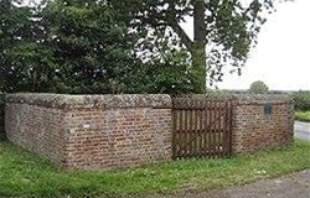
Walk through an old English village and you may occasionally see a low stone enclosure beside a green, churchyard, lane or common. It may be hidden by brambles, incorporated into a garden wall or labelled on a heritage sign that most people walk past without noticing.
That enclosure may be a village pound, sometimes called a pinfold.
Its purpose was straightforward. If livestock wandered where it should not, a local officer could impound it. A cow in a neighbour’s crops, sheep grazing in the wrong place or a loose pig on the road could be placed inside until the owner came forward. The owner would normally pay a fee and compensate for any damage caused.
The pound was useful because rural life depended on rules that were both practical and local. A wandering animal was not a minor inconvenience to someone trying to protect a small crop or a hay meadow. It could mean lost food, lost income and real hardship.
The important point is not simply that a village had somewhere to put a stray cow. The important point is that the village had a recognised system for handling the problem.
There were rules. There were responsibilities. There was an officer who could act. There was an expectation that people would answer to their neighbours.
That small enclosure represented a form of local authority that has become much rarer in modern England.
Common Fields and Common Duties
The village pound belonged to the older English world of open fields, commons and customary rights.
For much of medieval and early-modern England, farming was not organised around the fully enclosed fields that many people now picture when they think of the countryside. Villagers commonly held scattered strips of land in larger open fields. People could possess rights to graze animals on common land, gather certain materials, use meadows after harvest or turn livestock out at agreed times.
This was not a free-for-all. Shared rights required shared discipline.
A village might have rules governing the number of animals a household could graze, the date livestock could enter a common field, the boundaries of a meadow, the use of woodland and the penalties for damage. These rules were often rooted in local custom, but custom did not mean vagueness. In a settled community, custom could be highly specific and strongly enforced.
The pound was one visible part of that system.
A local poundkeeper or pinder might be responsible for rounding up wandering livestock and ensuring the rules were followed. It was a humble role, but it mattered. The pinder was not an anonymous official dealing with a spreadsheet in a distant office. He lived among the people whose animals he impounded. He knew the fields, the lanes, the families and the patterns of village life.
That closeness was not always comfortable. A person could not easily hide from the consequences of irresponsible behaviour when the affected neighbours lived a few doors away. But that was also the strength of the system. Responsibility was personal because community life was personal.
Before Whitehall England governed itself village by village through thousands of such arrangements: informal in appearance, often old in origin, but real in their authority.
The Parish as a Working Institution
When people hear the word parish today, they may think only of a church boundary or a council with limited powers. Historically, the parish was much more than that.
It was a core unit of local English life. Parishes had responsibilities for poor relief, roads, drainage, local order and aspects of public welfare. Parish officers included churchwardens, overseers of the poor, constables, surveyors of highways and others with duties that could affect daily life directly.
The parish vestry, usually made up of local ratepayers, could make decisions about spending and administration. It was imperfect. Participation was restricted, and the influence of local landowners could be considerable. But it was still a place where decisions were made by people who had a direct stake in the locality.
This is an important distinction. Local self-government does not mean every person had equal power or that every decision was wise. It means that political responsibility was tied more closely to place.
A parish road was not an abstract infrastructure programme. It was the route people used to get to market, take livestock to pasture or walk to church. Poor relief was not a national policy paper. It concerned widows, labourers, old people and families known to the parish. A dispute over a boundary, grazing right or drainage ditch involved people who had to continue living alongside one another afterwards.
That created a culture of practical negotiation.
In my view, this is one of the most overlooked differences between old local England and modern administrative England. The older system had rough edges, certainly. But people were not merely recipients of a service model. They were participants in the life of a place.
A Community Was More Than a Postcode
We now use the word community endlessly. Councils, corporations, charities, estate agents and government departments all use it. Yet it often means little more than a group of people occupying the same geographical area.
Older English communities were more demanding than that.
A community was built around common rights, mutual obligations, shared memory and repeated contact. It was structured by the parish, the church, the common, the market, the alehouse, the manor and the network of lanes and fields that people crossed every day.
People knew who had failed to maintain a hedge, whose animals had strayed, which household needed help and which local officer was responsible for a particular duty. That could foster neighbourliness, but it could also produce gossip, resentment and social pressure. Again, there is no need to turn the past into a rural fantasy.
Still, it created something that many people sense has weakened: a place that was legible to its inhabitants.
The phrase matters. A village was not simply a site on a planning map or a unit of population growth. It had a recognisable character, known boundaries, customs and people who understood their relationship to it.
The village pound demonstrates this beautifully. It was an everyday institution, not a grand constitutional monument. Yet it told villagers that shared life came with obligations. If an animal damaged a neighbour’s crop, the owner could not simply shrug and disappear. The village had a remedy.
That is what local government once meant: not just administration, but a lived framework of responsibility.
For more stories about the overlooked customs, objects and institutions that shaped ordinary life, see Everyday England Then and Now.
Enclosure Changed More Than Fields
The decline of the village pound is closely connected to one of the most important changes in English rural history: enclosure.
From the medieval period onwards, and especially during the 18th and early 19th centuries, common fields and customary rights were gradually replaced by enclosed private holdings. Land was surveyed, divided, hedged, walled and legally reorganised.
Enclosure was not a single event. It happened in different ways and at different times across England. Some changes were agreed locally; others were pushed through by parliamentary Acts and favoured those with money, property and influence.
There were genuine benefits. Enclosed farming could make it easier to introduce new methods, consolidate holdings, invest in drainage and improve production. England’s population was growing, and food supply mattered.
But the losses were profound.
For poorer rural households, common rights could be a thin but vital layer of independence. The ability to graze a cow, keep geese, gather firewood, collect fuel, forage or use common pasture could make the difference between hardship and survival. When those rights disappeared, many labouring families became more dependent on wages and more vulnerable to changing employment conditions.
The old village was never an equal society. But common rights gave some people a stake in the local economy that wage dependence did not.
The village pound became less central because its world became less central. As commons were enclosed and agriculture was reorganised around more clearly private land, the shared systems that had required daily local regulation weakened.
You can still see traces of that lost order. A wide village green, an oddly shaped lane, a surviving common, a field name, an old boundary bank or a stone pound may all preserve a fragment of an England organised differently from the one we inhabit today.
From Local Custom to Remote Procedure
Modern England has not simply modernised local life. In many ways, it has processed it to death.
We have consultations instead of consent. Strategies instead of customs. Targets instead of local judgement. National frameworks instead of local knowledge. Public bodies frequently claim to empower communities while practical decision-making moves farther away from the people most affected.
Consider a proposed housing development. Residents may know that the local GP surgery is overstretched, the primary school is full, the road floods after heavy rain and the village has already absorbed rapid change. Yet they may discover that the decisive calculations were made through national housing targets, development viability assessments and planning policies drafted far beyond the parish.
This does not mean all development is wrong. England needs homes, and local opposition should not become an excuse for refusing all change. The question is whether communities have genuine influence over the pace, form and consequences of what happens to them.
Too often, the answer is no.
The same issue arises with public transport, local services, policing, school provision and the management of public space. Decisions are justified through efficiency, budgets, standardisation and compliance. Those things matter. But when they become the entire language of government, they crowd out the older idea that a place has a character and should have meaningful authority over its own future.
That is why Before Whitehall England governed itself village by village remains more than a historical observation. It is a challenge to the assumption that centralisation is always progress.
What Old England Can Still Teach Us
Nobody sensible is arguing that England should recreate medieval village government exactly as it was.
We do not need to restore manorial courts, restrict democratic participation to ratepayers or pretend that the old open-field system could simply return. The past should be understood, not copied without thought.
But England can recover principles that older local institutions expressed.
First, decisions should be made as close as possible to the people who live with their consequences. That means stronger parish, town and county powers, not merely more consultation documents.
Second, local people should have a more meaningful stake in development. If a community is expected to accept new housing or infrastructure, it should have a real voice in design, phasing, services and the benefits that remain locally.
Third, local history should be treated as part of civic education. A village pound, parish chest, old market cross or common is not decorative heritage. It is evidence of how people once organised responsibility and belonging.
Fourth, national government should understand that efficiency is not the only public good. Continuity, trust, local knowledge and attachment to place matter too. They are not obstacles to progress. They are conditions for a society that people recognise as their own.
This is where the phrase Before Whitehall England governed itself village by village becomes useful. It reminds us that England’s political inheritance was built from the ground upward: household, hamlet, parish, town, county and nation.
A country is not sustained only by Parliament, laws and economic output. It is sustained by habits of mutual responsibility and institutions close enough for ordinary people to understand, influence and defend.
The Lesson of the Village Pound
The next time you see a low stone enclosure in an English village, pause before walking on.
It may be a village pound, built for a practical task that modern life has largely forgotten. But it also represents an older understanding of local life. It was a reminder that people belonged to a place, owed duties to their neighbours and had rules shaped by the needs of their own community.
That world had real flaws. It could be narrow, unequal and harsh. Yet it possessed something that modern England too often lacks: a clear connection between people, place and power.
Before Whitehall England governed itself village by village. The village pound is one modest but powerful piece of evidence.
We do not need to live in the past to recognise what has been lost. We need only ask whether people in England today have enough control over the communities they call home.
If this article resonated with you, explore more stories of ordinary English life, forgotten institutions and the traditions that still shape the country at Everyday England Then and Now. Then share this article with someone who cares about the history, character and future of England.
Frequently Asked Questions
What was a village pound in England?
A village pound, also known as a pinfold, was an enclosed area used to hold stray livestock. Local officials could impound animals found damaging crops, wandering on roads or grazing where they were not permitted. The owner normally had to pay a fee and settle any damage before the animal was released.
What did a pinder do?
A pinder, also called a poundkeeper, was the local person responsible for impounding stray animals and overseeing the village pound. The job formed part of the practical enforcement of local agricultural rules, particularly where common grazing and open-field systems existed.
When were village pounds used in England?
Village pounds were used from at least the medieval period and remained common into the 18th and 19th centuries. They became less important as enclosure reduced common grazing rights, livestock management changed and rural life became less organised around shared fields and customary rules.
How did enclosure affect English villages?
Enclosure divided and privatised many open fields and common lands. It could improve agricultural production, but it also removed or reduced customary rights used by poorer households for grazing animals, collecting fuel and maintaining small forms of independence. It changed the economic and social character of many villages.
Did England really govern itself village by village?
To a significant extent, yes. Before modern central government became so extensive, many everyday matters were managed locally through parishes, customary rights, vestries, manor courts, market rules and local officers. These arrangements were not fully democratic or equal, but they gave communities more direct responsibility for local life than exists in many areas today.